Private Label Shaker Bottles: OEM Sampling and Lead Times
Private-label electric shaker bottles: how OEM sampling works, what a sample confirms, and how the 15–20 day lead time is structured. MOQ 1,000 pieces.
A private-label electric shaker bottle order starts with a paid sample, then artwork approval, then production at a 15–20 day lead time and a 1,000-piece MOQ. The sample is where logo print, colour, packaging and mixing are confirmed — everything after it follows the approved sample.
How OEM sampling works
Sampling is the first step of a private-label order, not an extra. The sequence published across the product pages is:
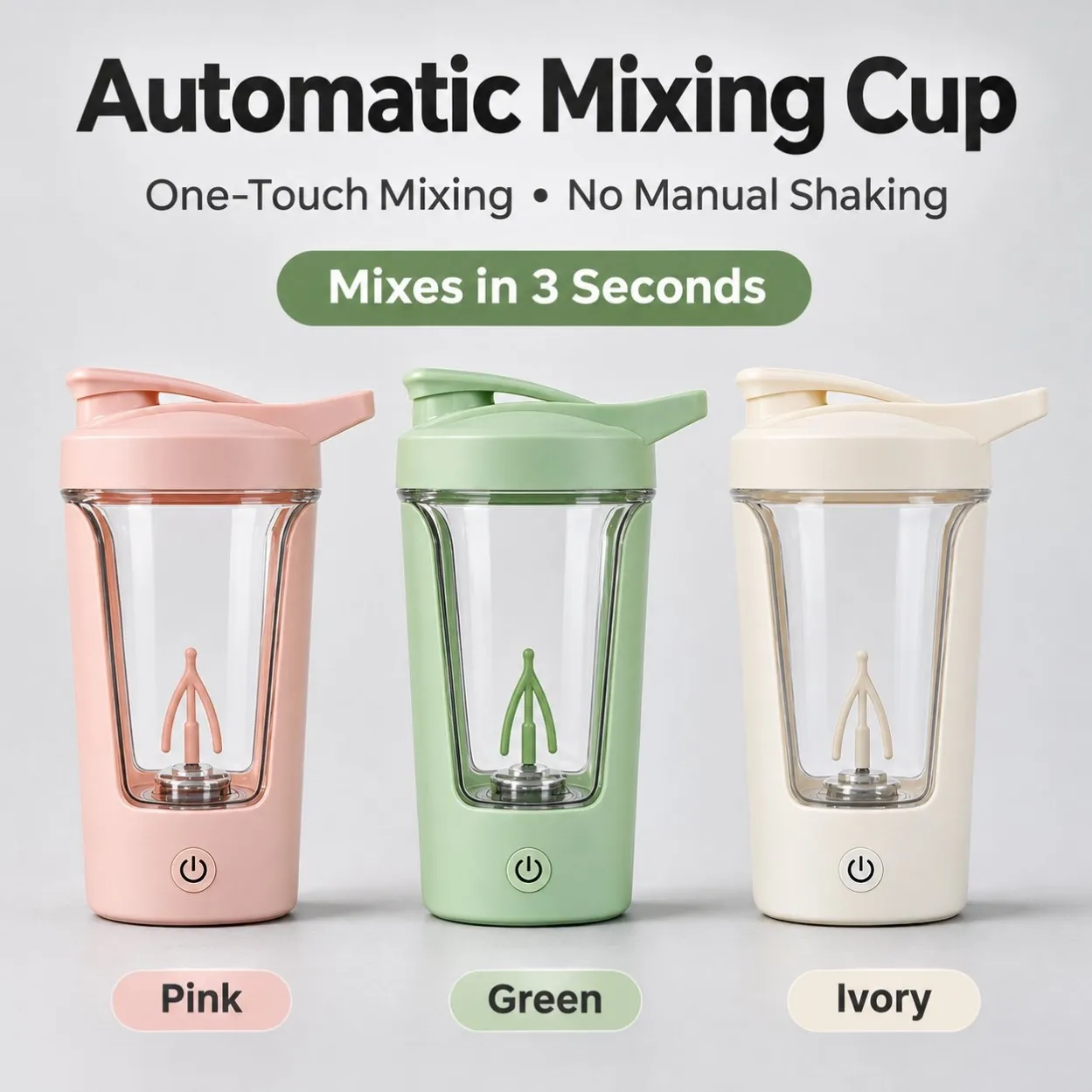
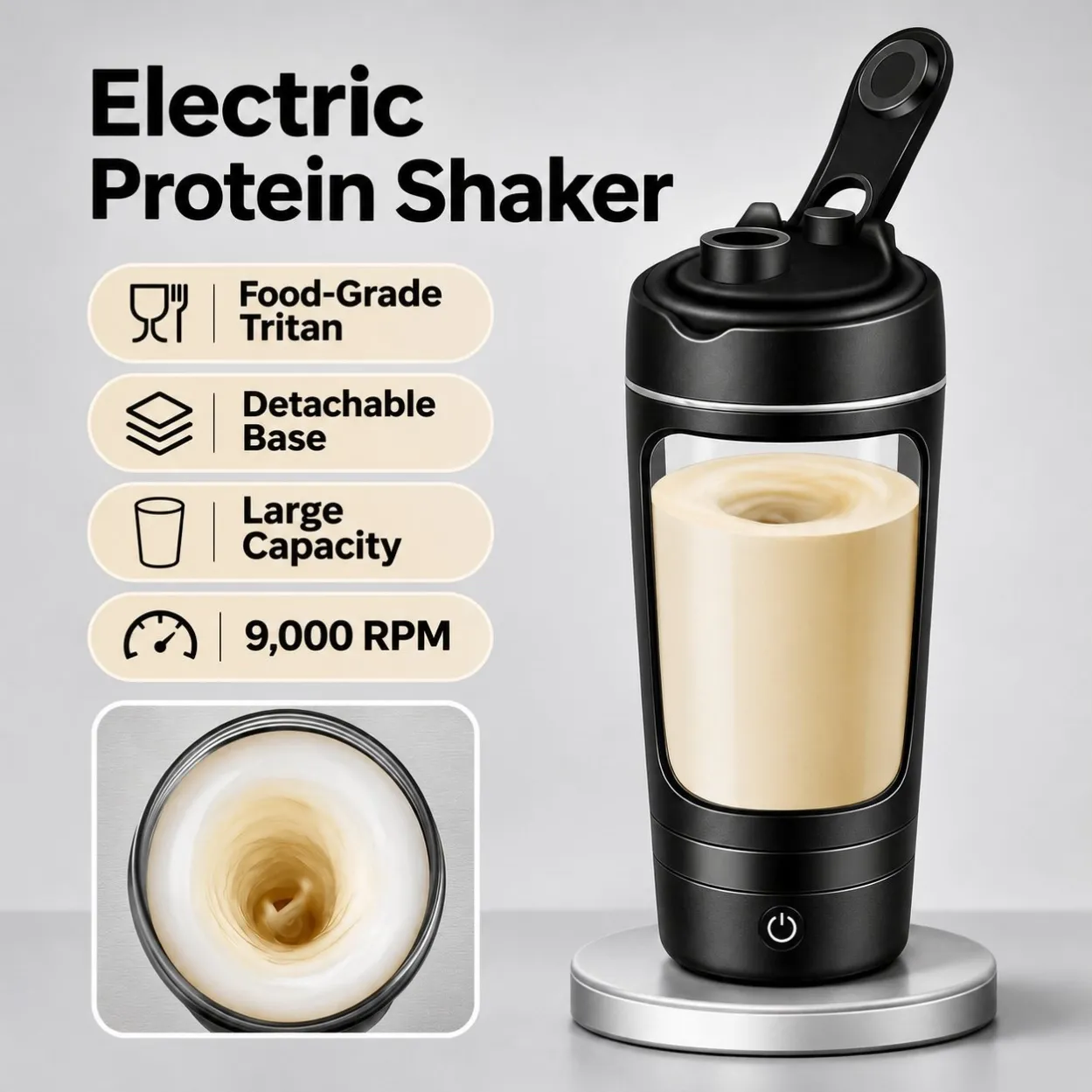
- Choose the model. Pick from the published range by capacity, motor speed and features — 450 ml, 550 ml and 800 ml cups; 6,000, 7,000 and 9,000 RPM motors; detachable-base and LED-ring options on some models.
- Order a sample. Samples are available and charged; the fee varies by model, so it is confirmed with the enquiry.
- Test it against your recipe. Mix the thickest recipe the brand will sell and check for unmixed powder, stalling and leaks.
- Approve the artwork. Logo printing, colour and packaging are confirmed against the sample. The approved sample locks the specification production follows.
- Production runs. Lead time is 15–20 days from the approved order, at a 1,000-piece MOQ.
Sample timing is confirmed with the enquiry — no sample-production-day figure is published, so this article states none.
What a sample confirms
| Check | What to test on the sample | Why it matters |
|---|---|---|
| Logo print | Print position, size and colour on the actual cup | The printed sample is the artwork reference for the bulk run |
| Colour | The cup colour against the brand's colour standard | Colour is a customisation option, confirmed on the sample |
| Packaging | Box type and inserts as ordered | Packaging options are part of the customisation, not an afterthought |
| Mixing | The brand's thickest recipe, mixed to the end | RPM alone does not prove a thick shake mixes cleanly |
| Detachable base | Base removal and refitting, if the model has one | EC003, EC015, EC022, EC026, EC030 and EC047 publish a detachable base |
| LED ring | Ring behaviour while mixing, on LED models | EC006, EC040, EC041 and EC054 publish a multicolour or coloured LED ring |
The models most often sampled for private label
| Model | Capacity as published | Motor as published | Battery as published | Other published facts |
|---|---|---|---|---|
| EC047 | 550 ml (max 630 ml) | 9,000 RPM | 1200 mAh | USB-C, IPX6, detachable base, Tritan |
| EC003 | 630 ml cup / 500 ml scale | 9,000 RPM | 1200 mAh | USB-C, removable base, 311.7 g |
| EC024 | 450 ml | 6,000 RPM | 500 mAh | USB-C with cable included, IPX5, Y-shaped stirrer |
| EC030 | 450 ml (max 530 ml) | 7,000 RPM | 500 mAh | USB-C, full charge 3–4 hours, IPX6 |
| EC019 | 450 ml | 6,000 ± 500 RPM | 500 mAh polymer | USB-C 5 V / 1 A, 2.2 W motor, ring stirrer |
| EC051 | 450 ml | 7,000 RPM | Not stated | Tritan, BPA-free, food-grade mixing paddle, blends in about 5 seconds |
Battery figures for EC006, EC040, EC041 and EC054 are not published and are not used here.
How the 15–20 day lead time is structured
The 15–20 day lead time stated on the product pages is the production lead time. It starts after the order is confirmed — model, artwork and quantity settled, sample approved — not from the first enquiry. Three things sit in front of it:
- Model choice and sampling. The sample stage runs first; its timing is confirmed with the enquiry.
- Artwork approval. Logo printing and packaging are confirmed against the sample before production starts.
- Production and QC. The 15–20 days cover production; QC checks run during production.
A buyer who needs a date should send the model, the quantity and the artwork status together — those three decide whether the clock can start.
Material compliance: what the sample can and cannot prove
The cups are food-grade Tritan on the models that publish it, and EC013, EC038 and EC051 publish BPA-free. The SGS report CE/2025/61722 and the Eastman Tritan TX1001 datasheet cover the Tritan material (pellets), not the finished bottle — they are material-level compliance, and this article presents them that way. A sample confirms how the finished bottle looks, prints and mixes; material documentation is a separate item to request with the enquiry.
FAQ
How much does a sample cost?
Samples are charged and the fee varies by model. Confirm the fee for the shortlisted model with the enquiry — no sample price is published.
What does the sample confirm?
Logo print, colour, packaging, mixing performance on your own recipe, and the fit of any detachable base or LED ring. The approved sample locks the specification the bulk run follows.
How long is the lead time?
15–20 days for production, as stated on the product pages, starting after the order is confirmed with artwork approved. Sampling runs before that and its timing is confirmed with the enquiry.
What is the MOQ?
1,000 pieces, as stated on the product pages. Logo printing, colour and packaging customisation are available at that quantity.
Which model should a brand sample first?
Start from the recipe and the cup size: EC024 or EC019 for standard 450 ml protein shakes, EC047 or EC003 for larger cups at 9,000 RPM with a 1200 mAh battery, EC030 for a 7,000 RPM mid-range option. Test the thickest recipe on the sample before choosing.
Is the cup material food-grade?
The models that publish a material state food-grade Tritan; EC013, EC038 and EC051 also publish BPA-free. Material-level documentation (Eastman Tritan TX1001, SGS CE/2025/61722) covers the pellets, not the finished bottle.
Bottom line
Sample first, approve the artwork on the sample, then production runs 15–20 days at a 1,000-piece MOQ. Send the model, the quantity and the artwork status to start — those three decide when the clock starts.