Product Knowledge
How to Choose an Electric Shaker Bottle for Your Brand: A B2B Buyer's Guide
Capacity, materials, mixing performance, battery and customization - how B2B buyers can match an electric shaker bottle to their market, with MOQ and sampling steps from a factory catalog.
Electric shaker bottles have moved from a novelty to a catalog staple for fitness brands, corporate gift distributors and promotional agencies. But a factory catalog lists many models with different capacities, materials and motors - and the right choice depends on your market, not on the highest specification. This guide walks through the five decisions that matter when selecting an electric shaker bottle for your brand.
Start with capacity
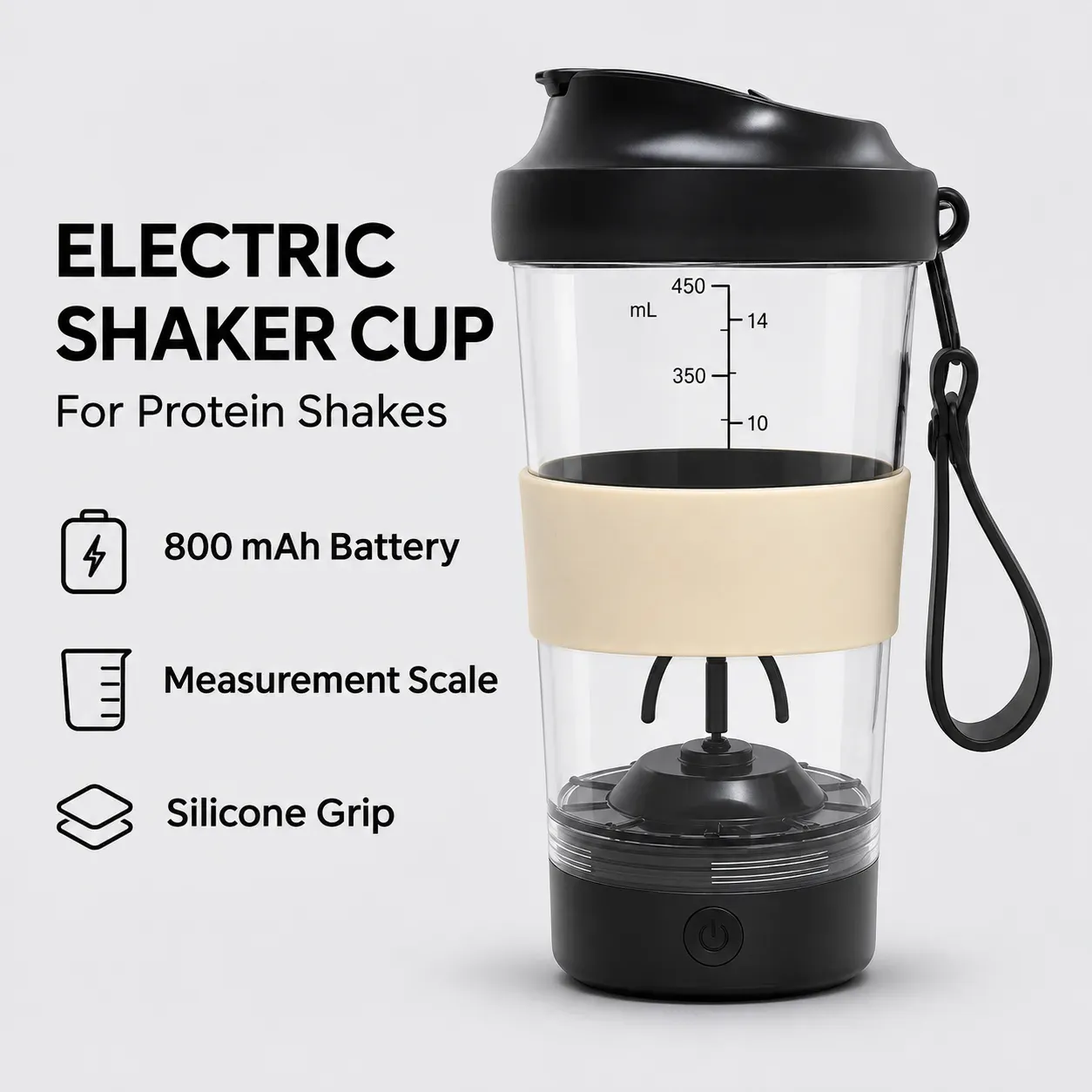
Catalog capacities run from compact 300 ml self-stirring cups to 630 ml protein shakers. A 300 to 400 ml cup suits coffee, office desks and corporate gifting where the bottle is used several times a day. A 450 to 500 ml bottle is the classic protein-shake size for gyms and fitness brands. Larger 600 to 630 ml cups fit meal-replacement and post-workout audiences. Note that some cups show two numbers - for example a 630 ml cup with a 500 ml scale - the first is total capacity, the second the printed measurement line.
Match the material to the use case
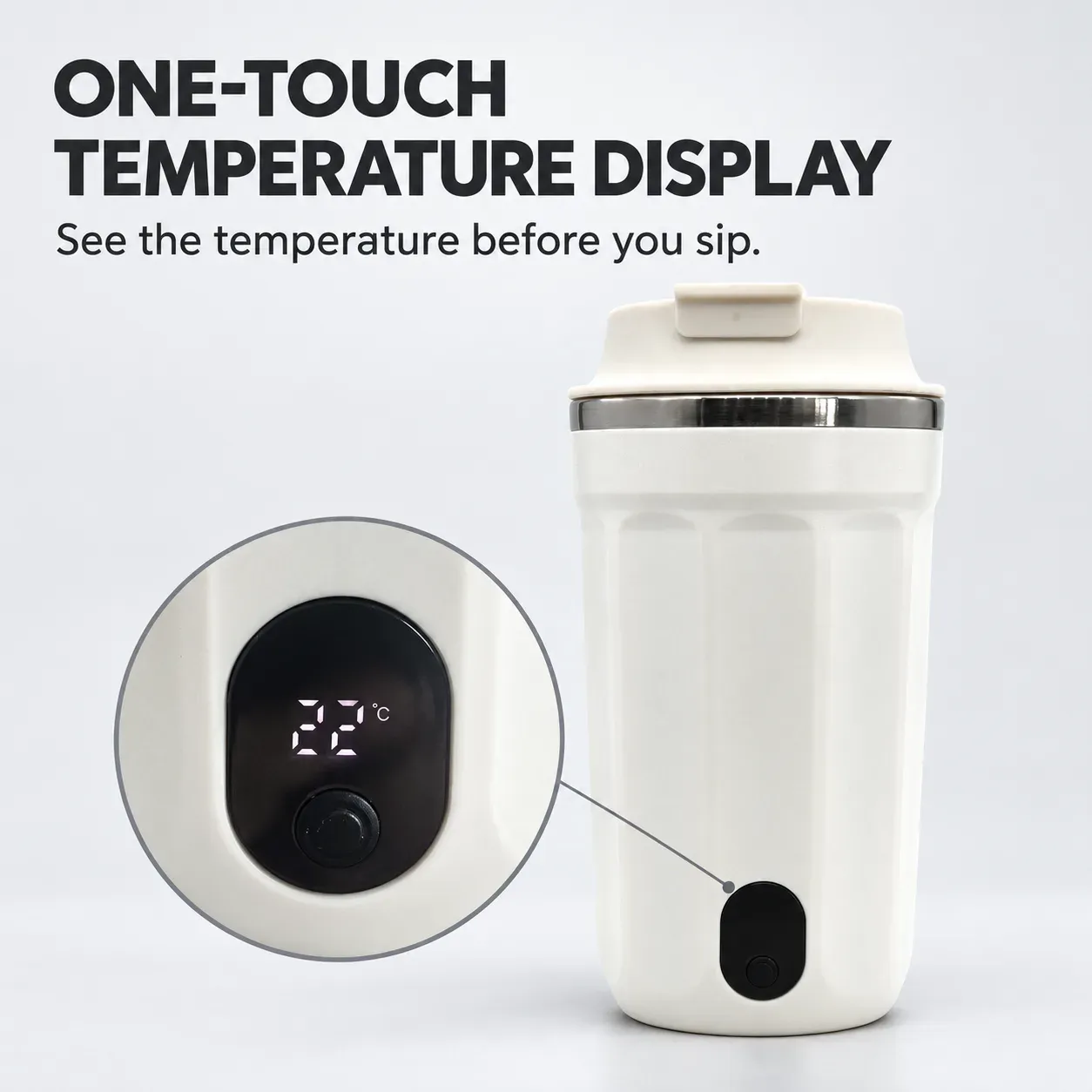
Tritan is the most common body material: lightweight, food-grade and available in many colors, which makes it the default for branded merchandise. Borosilicate glass appeals to buyers who want a purer taste and a premium look for fresh fruit blends. A 316 stainless steel interior, found on temperature-display models, adds durability and a premium feel for executive gifts. Silicone, PP and ABS appear in lids, grips and rotors - confirm food-contact grade for every part that touches the drink.
Compare mixing performance honestly
Motor speed across typical models runs from about 7,000 to 9,000 rpm, with one-touch mixing that smooths a shake in around five seconds. Vortex designs with a built-in paddle handle protein powder well; self-stirring cups with sealed rotors are easier to rinse; magnetic-drive mugs are the simplest to clean for coffee and light drinks. Ask the factory for the rpm figure and the mixing-time claim in writing - and test both with your own powder during sampling.
Check battery and charging
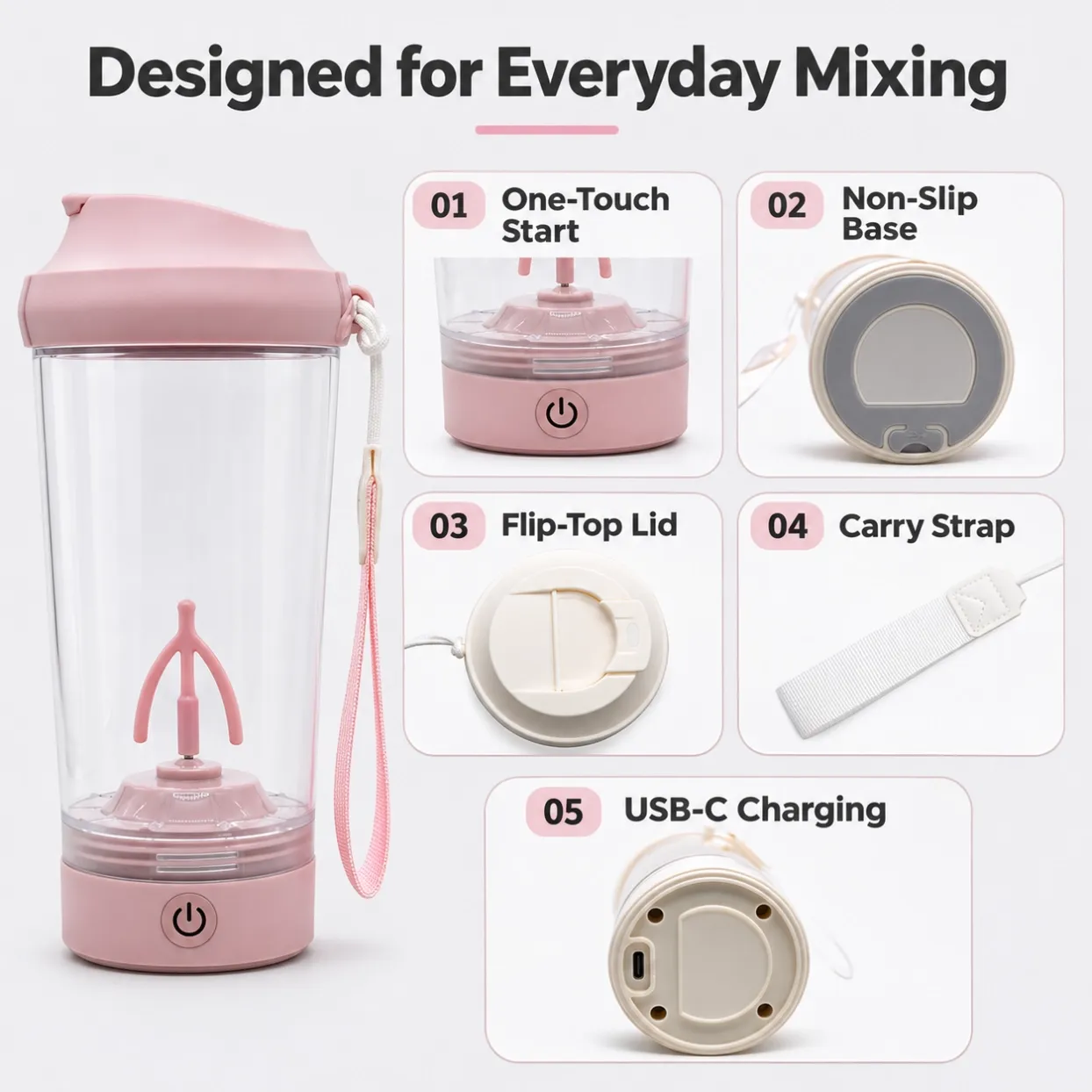
Rechargeable models typically carry 800 to 1,200 mAh batteries charged over USB-C. Some larger cups run about 100 minutes per charge and recharge in roughly 2.5 hours - numbers that matter for gym-chain giveaways where users expect a week of sessions between charges. If your market travels, prioritize a USB-C port over proprietary cables.
Do not overlook cleaning and daily use
A detachable base with a washable cup body is the feature that decides long-term satisfaction - it turns a two-minute rinse into a full clean. Wide openings make brushing easier, flip-top spouts allow one-hand drinking, and carry rings or straps fit gym bags. For corporate orders, cleaning convenience is the feature recipients mention most in repeat orders.
Customization, MOQ and sampling
Most factories offer logo printing plus color and packaging options confirmed per order quantity. A typical starting point is 100 pieces per model with a 15 to 20 day production window. Always order a sample first: confirm the logo size and print position on the real cup, test mixing with the powder your customers actually use, and check the charging port. Send your required quantity, logo artwork and delivery destination to get a firm quotation with the production schedule.
Choose by capacity for your audience, material for your price point, and battery plus cleaning features for daily satisfaction - then validate everything with a sample run. If you are comparing models, our product catalog lists full specifications for every electric shaker bottle, mixing cup and self-stirring mug we manufacture, and our team can recommend the right model for your program.