Product Knowledge
Tritan vs Borosilicate Glass vs Stainless Steel: Choosing a Shaker Bottle Material
The cup material decides weight, taste, durability and price - a practical comparison of Tritan, borosilicate glass and 316 stainless steel for branded electric shaker bottles and mixing cups.
When brands order electric shaker bottles or mixing cups, the material of the cup decides more than the look: it sets the weight in a gym bag, the taste of the drink, how the cup survives daily use and where the unit price lands. Factory catalogs typically offer three cup materials - Tritan copolyester, borosilicate glass and stainless steel - plus food-contact plastics for lids, rotors and grips. Here is how they compare for B2B buyers.
Tritan: the everyday workhorse
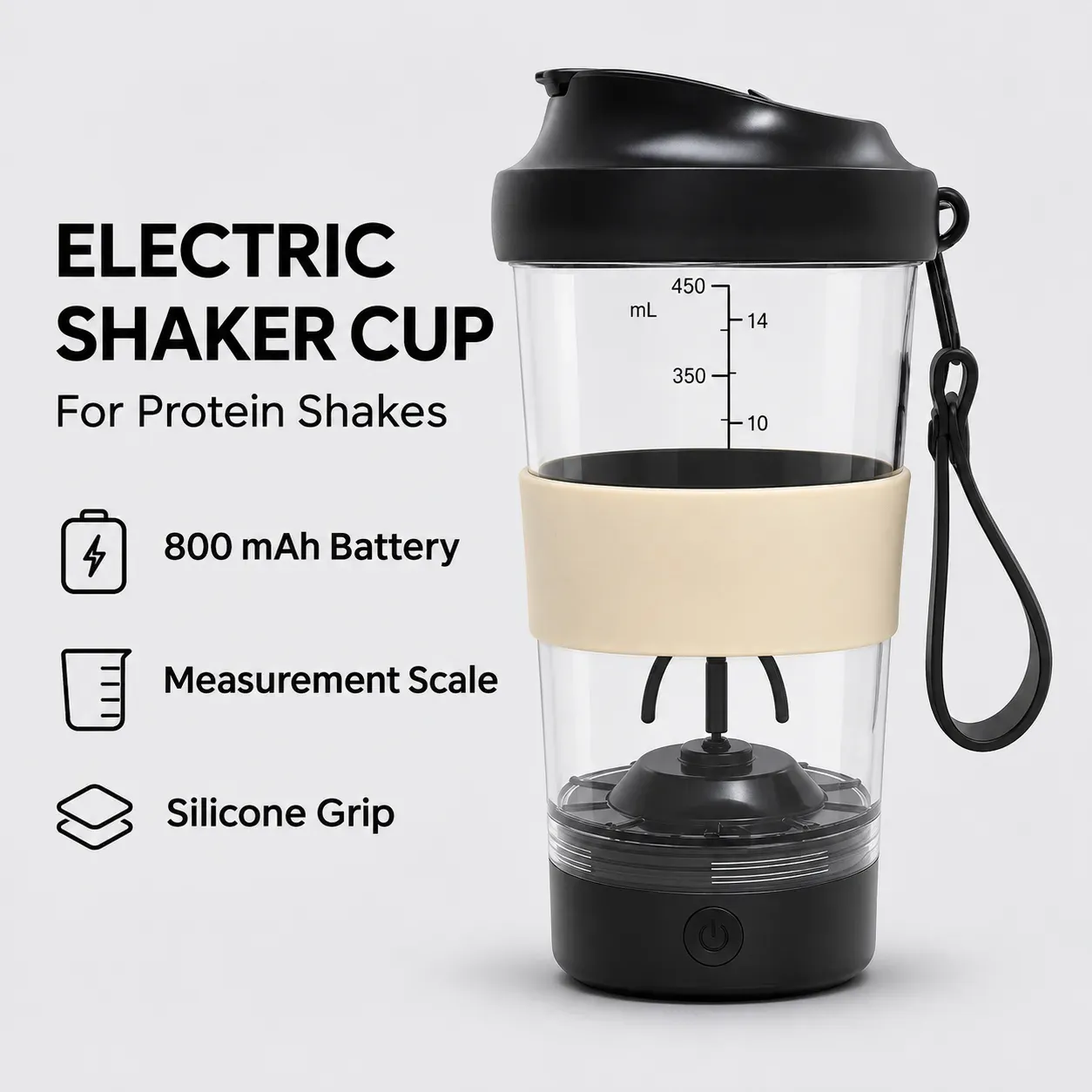
Tritan is the most common body material in electric shaker lines: a lightweight, food-grade copolyester available in many colors, which makes it the natural choice for branded merchandise. It handles daily drops better than glass, keeps the cup light for on-the-go use, and its translucency shows the measurement scale clearly - most 300 to 630 ml models in a typical catalog use it. For fitness brands ordering at volume, Tritan offers the best balance of cost, color options and durability.
Borosilicate glass: premium and pure-tasting
Borosilicate glass appeals to buyers positioning a fresh-fruit blender or juice cup as a premium item. It keeps flavors clean with no plastic contact, tolerates temperature changes well, and the glass body gives the product a heavier, more substantial feel in the hand. The trade-offs are weight and breakability: glass cups suit home, office and gifting scenarios more than the bottom of a gym bag. If your audience blends fresh fruit rather than powder, borosilicate is the differentiator.
316 stainless steel: the executive option
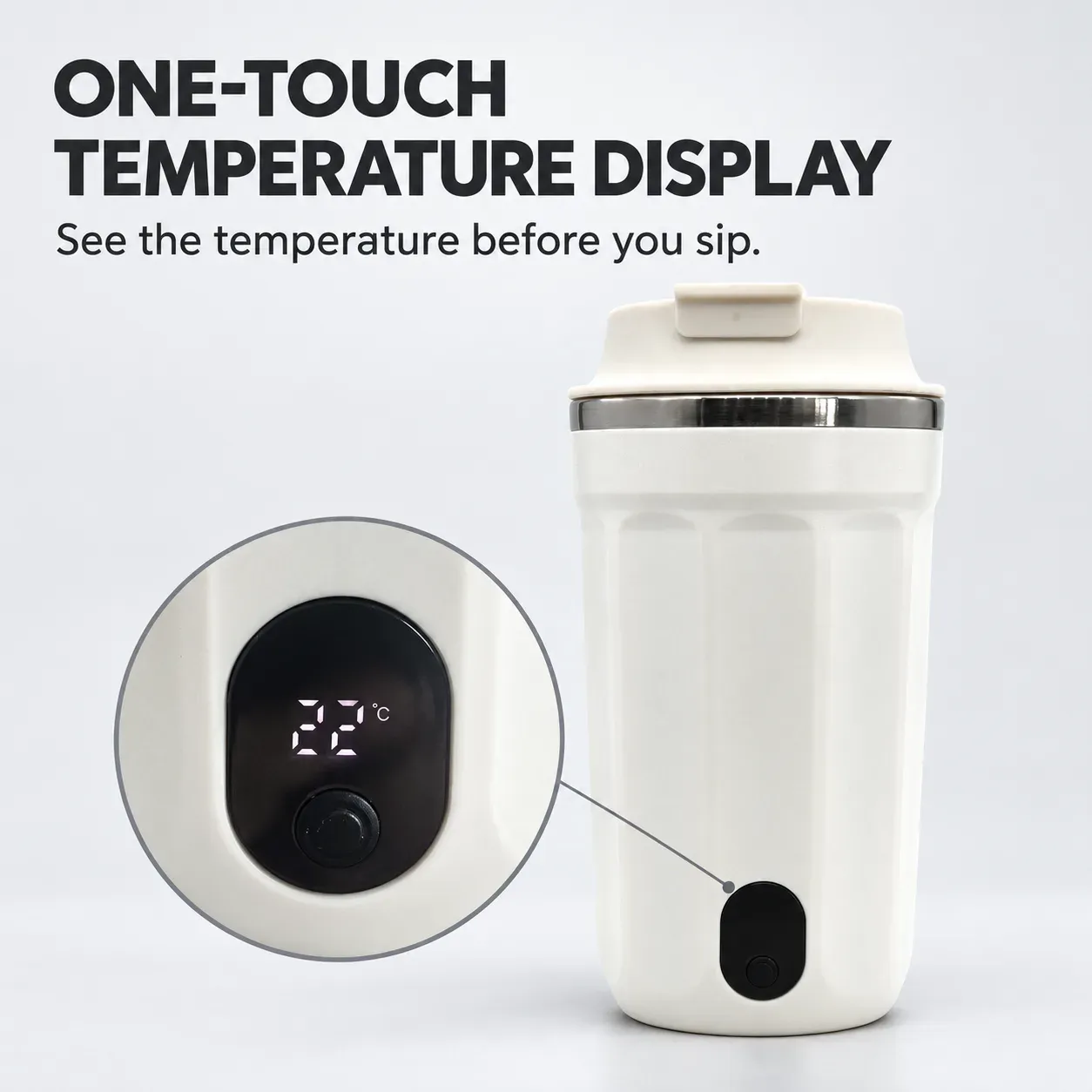
Stainless steel interiors appear on higher-end models - for example temperature-display mixing mugs with a 316 steel interior that resists corrosion and scratches, paired with a silicone, PP and ABS outer body. Steel suits executive gifts and office coffee programs where durability and a premium feel matter more than weight. These models often carry extra features such as one-touch mixing with a removable food-contact rotor, which also makes cleaning simple.
Do not forget the food-contact plastics
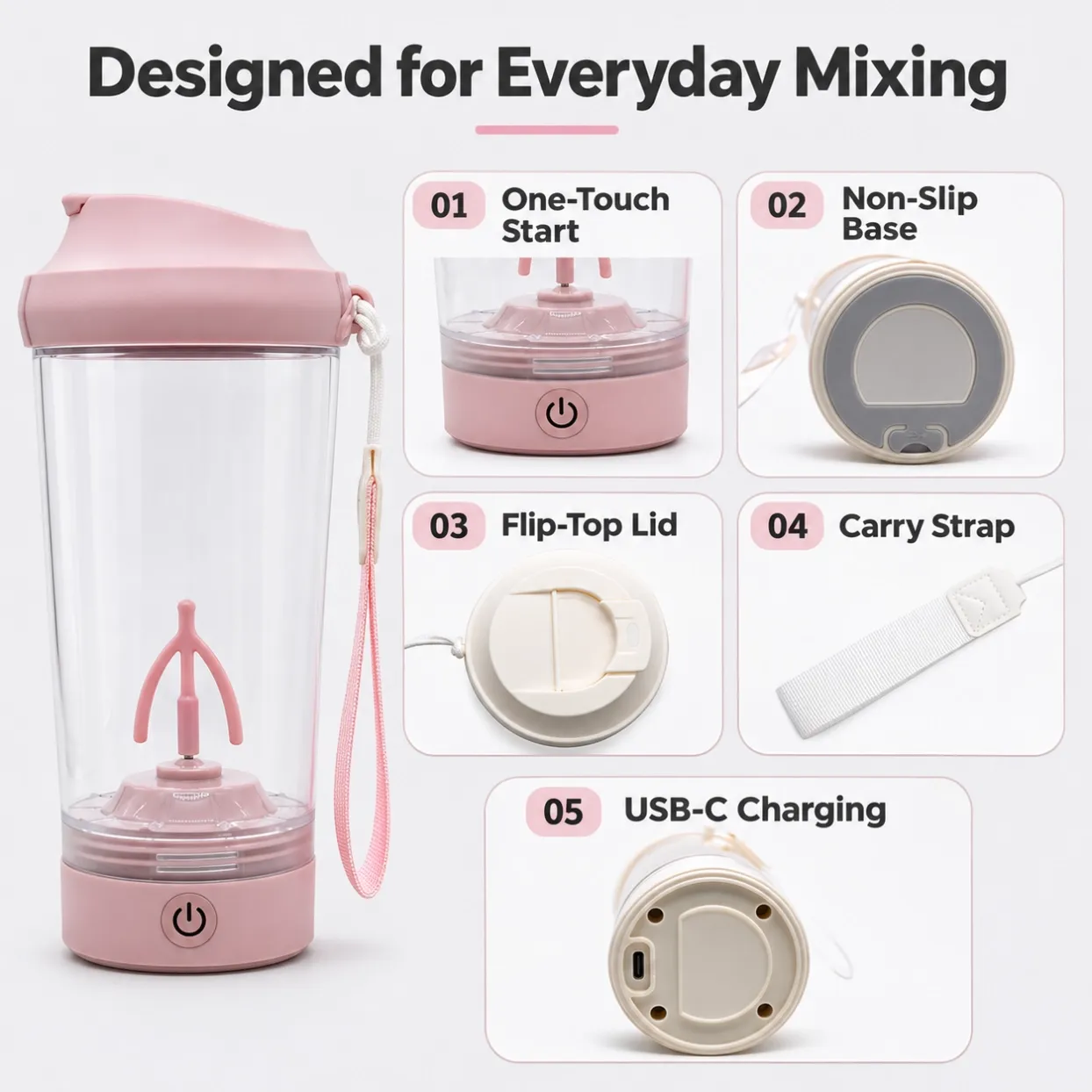
Whatever cup material you choose, the parts that touch the drink also matter: lids, mixing rotors and grip sleeves are commonly food-contact PP or silicone, and they should be confirmed as food-contact grade in writing. Check the rotor temperature range if your market drinks hot beverages - food-contact PP rotors, for instance, are typically rated from -20 to 110 degrees C. A detachable base with a washable body turns these details into a feature recipients actually notice.
A quick decision rule
If your program needs color, light weight and volume pricing, choose Tritan. If it needs a premium, pure-taste story for fresh ingredients, choose borosilicate glass. If it targets executive gifting with durability and premium positioning, choose a stainless steel interior. Then validate with a sample: check the logo printing on the real material, test the scale readability, and confirm every food-contact part. Send your quantity, artwork and destination to the factory for a quotation with the production schedule - typical runs start at 100 pieces with 15 to 20 day production windows.