How to Choose an Electric Shaker Bottle for Protein Shakes
Choose a 450–800 ml electric shaker for protein shakes: check mixing speed against the powder, capacity against the liquid, and battery against shakes per day. Confirm cleaning and logo printing.
For protein shakes, choose a 450–800 ml electric shaker with a stated mixing speed, a USB-C rechargeable battery and a Tritan cup. A 450 ml bottle fits one shake; a 630–800 ml bottle leaves room for extra water or a second scoop. Check three things in this order: mixing speed against the powder, capacity against the liquid, and battery against the shakes per day.
What makes a protein shake hard to mix
Protein powder clumps when it meets liquid in the wrong order or in too little of it. The fix is simple and it works in any electric shaker: pour the liquid in first, add the powder, then switch the motor on. A dry cup with powder at the bottom is the most common cause of lumps, and no motor speed fixes powder that never met the liquid. Mixing also depends on the powder itself, so treat any single shake as a test, not a promise. If a shake still has lumps after a full mixing cycle, add a little more liquid and run the motor again. Test with the actual powder before you commit to a bottle.
Mixing speed — what the rpm figure actually means
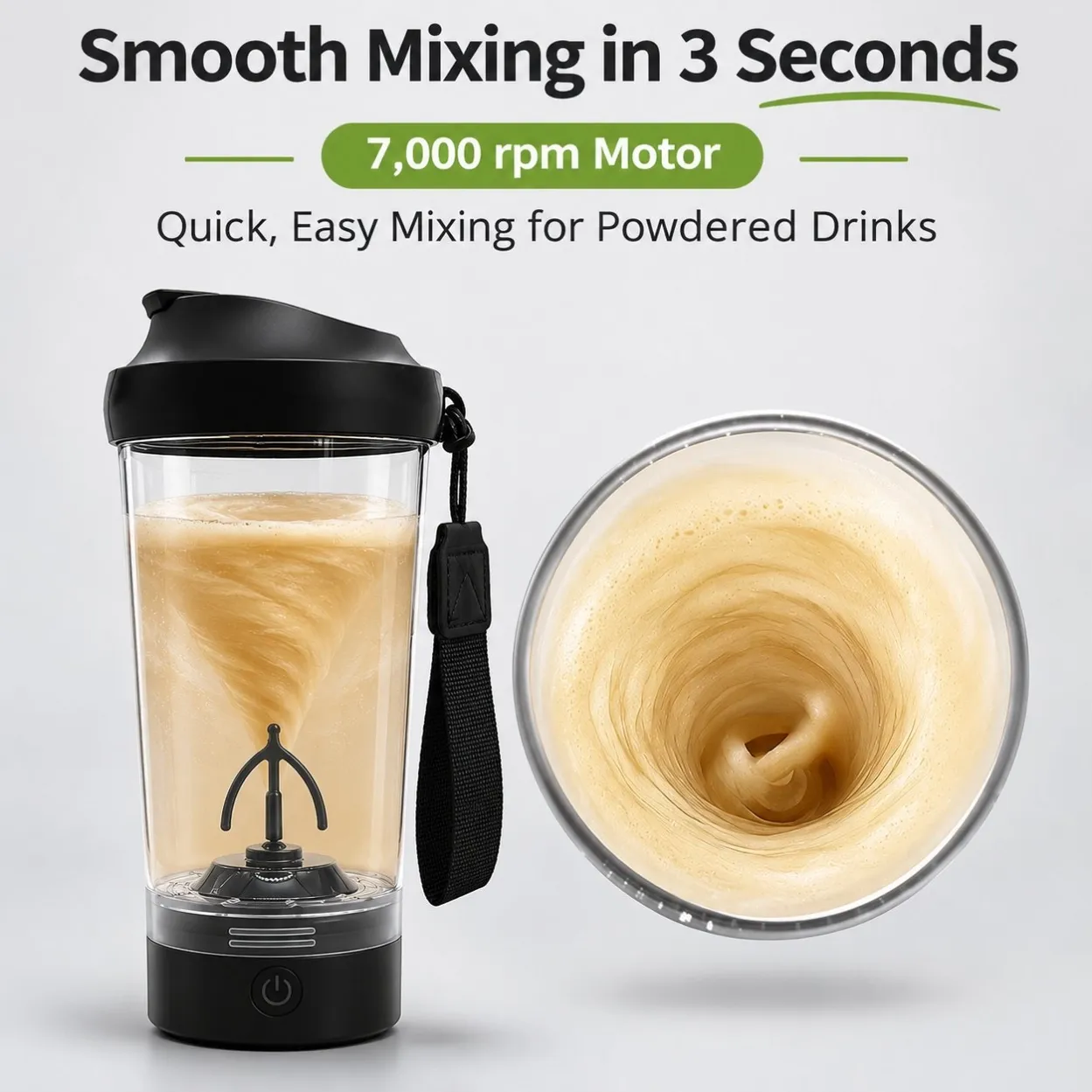
Mixing is described by speed in rpm, and the stated range is wide. The fastest figure on record is 18,000 rpm, listed in the specification table for the glass blender bottle. Next come two at 9,000 rpm: the protein shaker bottle and the self-stirring mug with the temperature display (maximum 9,000 rpm). Two more are listed at 7,000 rpm: a Tritan shaker and a self-stirring shaker bottle. A higher figure does not prove a smoother shake — shortlist the faster bottles and test a sample first, especially with a thick powder. The only power figure on record is 2.5 W. Do not quote a speed or wattage that is not listed — treat an unlisted figure as unknown, not zero.
Capacity and the powder-to-liquid ratio
One shake is usually one scoop in 300–500 ml of water or milk. The smallest bottle here, at 450 ml, fits one shake and nothing more. Two mid-size bottles, both 630 ml on the body, leave room for a shake plus extra water — but check the scale mark, not the brimful figure: one holds 550 ml to its scale line, the other 500 ml. The two big 800 ml bottles suit a double scoop. Start with the liquid, add the powder, and add more liquid only after the first mix.
Battery and charging — what daily use needs
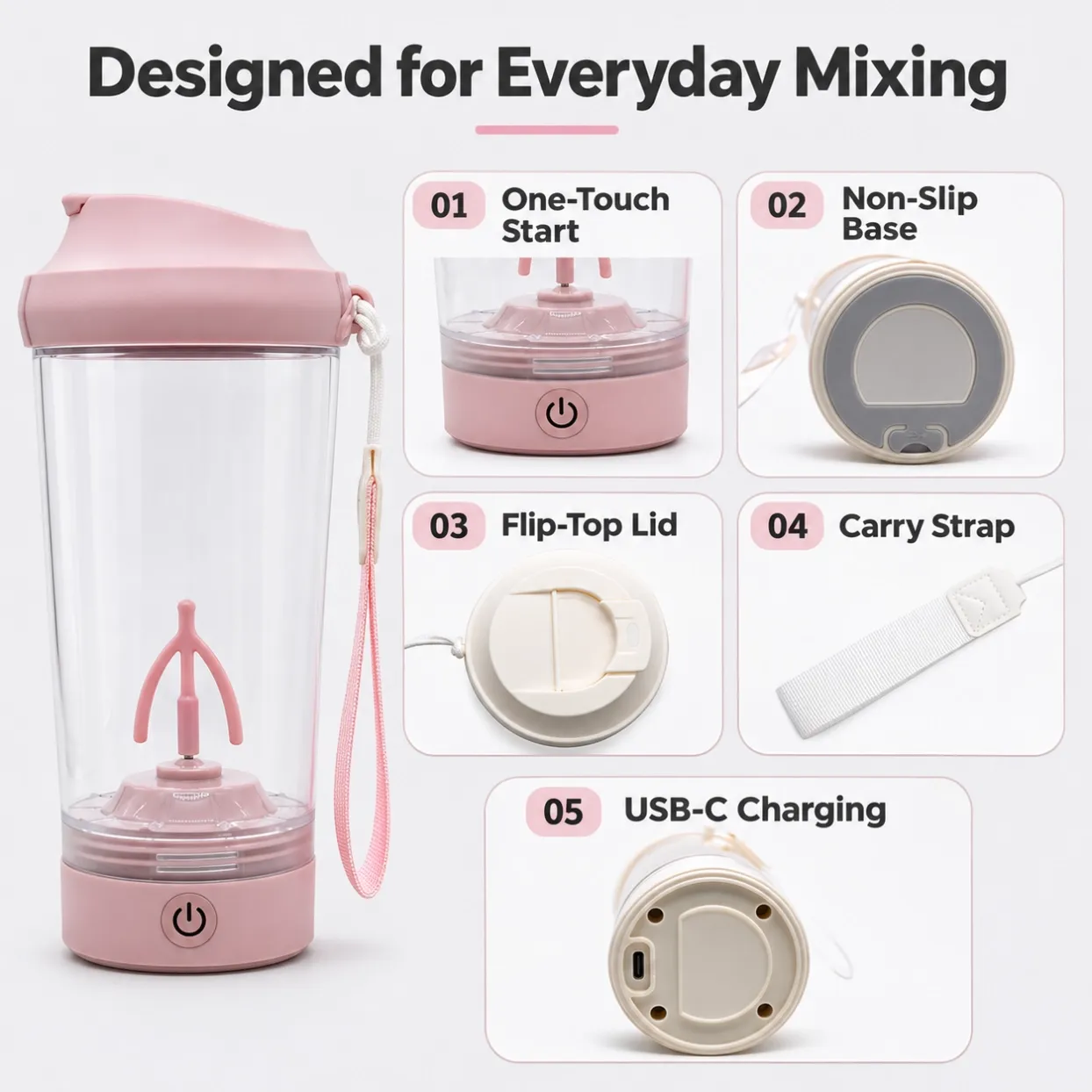
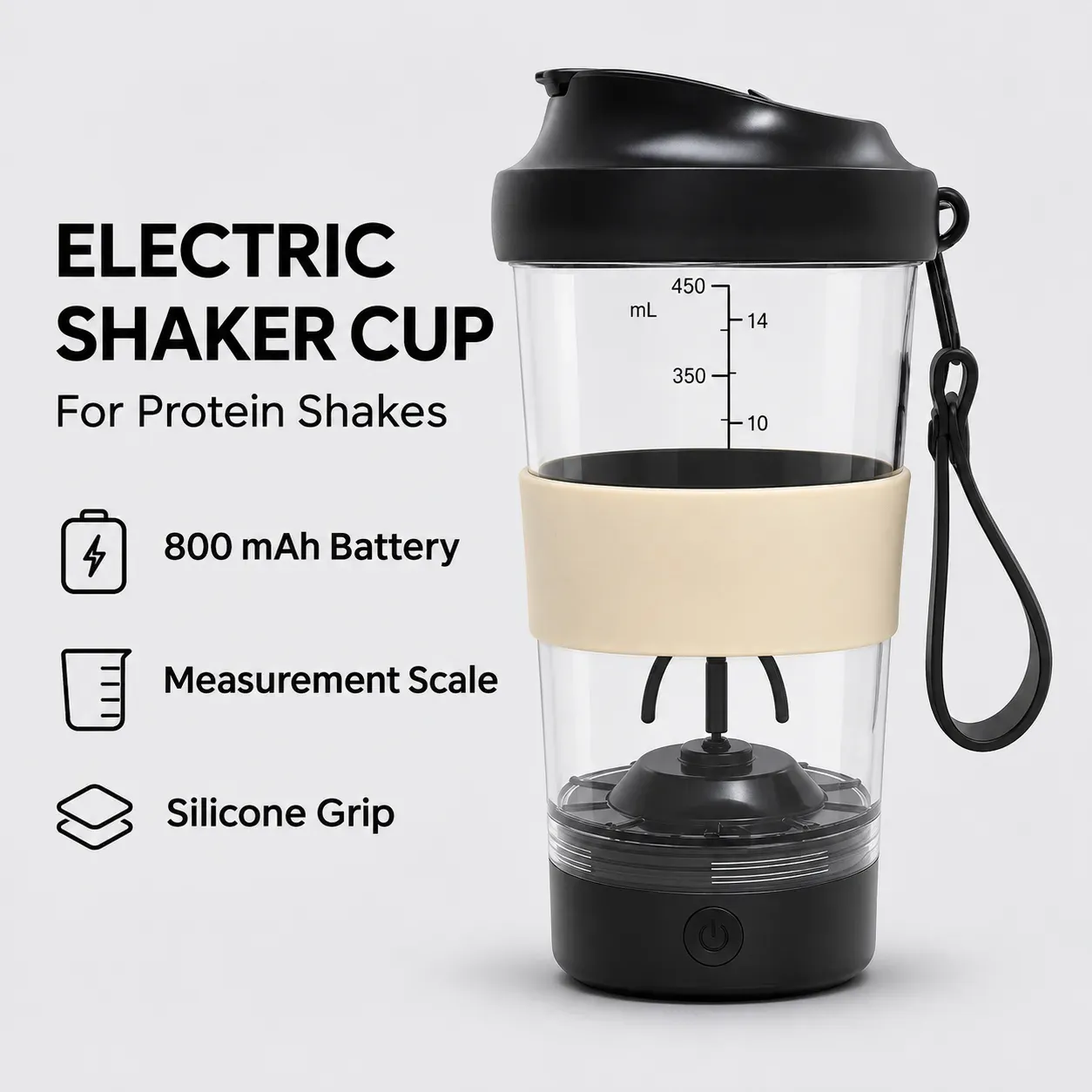
A protein shaker is used away from a wall socket, often several times a day. The listed figures are: 1,200 mAh in the larger bottles, 800 mAh in two smaller ones, one of them with USB-C charging, and 2,000 mAh in the glass blender bottle. Only one bottle states a runtime and a charging time: about 100 minutes of use, about 2.5 hours for a full charge over USB-C. A smaller bottle is listed at 500 mAh with 60 minutes of continuous use per full charge, as shown in its product image. Before a bulk order, charge one sample fully and count how many shakes it mixes.
Material, cleaning and what touches the drink
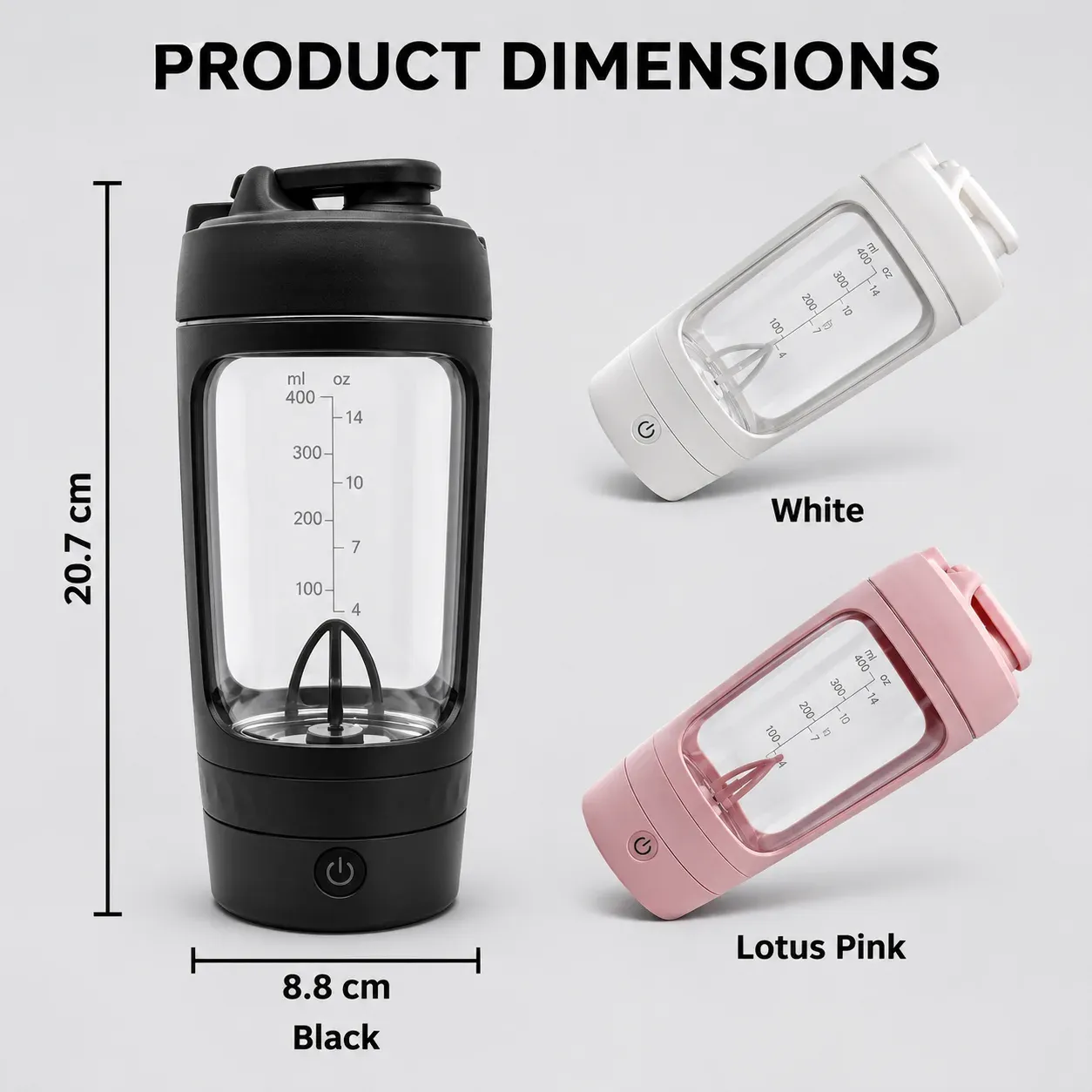
Protein residue dries fast and smells if it is left, so cleaning matters as much as the motor. Most cups here are Tritan; the mug with the temperature display has a 316 stainless steel liner, and one bottle is listed as food-grade Tritan with heat resistance up to 100 °C, as shown in its product image. Rinse the cup and rotor with water right after the shake, then wash them by hand — confirm dishwasher and microwave safety with sales before promising them. Two bottles state a waterproof rating of IPX6 and one states IPX5. Stated weights in this range run from 239 g to about 400 g. Stated dimensions include 10.6 x 9.8 x 24.2 cm for one of the big 800 ml bottles, 9.5 x 9.0 x 18.6 cm, and 9.1 x 18.4 cm for the mug with the temperature display. Confirm colours with sales before promising a specific colour.
Frequently asked questions
Q: Which bottle mixes protein powder best?
A: Shortlist by the stated speed first: the fastest listed is 18,000 rpm in the glass blender bottle, then 9,000 rpm in the protein shaker bottle and the mug with the temperature display. Then test a sample with your own powder — speed alone does not prove a lump-free shake.
Q: How much liquid should I use per scoop?
A: A common starting point is 300–500 ml of water or milk per scoop. The smallest bottle at 450 ml fits one shake; a 630 ml or 800 ml bottle leaves room for extra liquid. Always check the scale mark, not the brimful figure.
Q: Will it handle thick shakes with oats or peanut butter?
A: Thick mixes need more liquid and a longer mixing cycle than a plain shake, and no tested figure is stated for them. Add the liquid first, mix, then add more liquid if lumps remain.
Q: How do I clean it after a protein shake?
A: Rinse the cup and rotor right after drinking, then hand-wash them. Do not promise dishwasher safety to customers. Confirm dishwasher and microwave safety with sales first.
Q: Can we print our supplement brand logo on it, and what is the minimum order?
A: Yes. Logo printing is available, with colour and packaging options. Minimum order is 1,000 pieces, typical lead time 15–20 days, samples are available at a charge (not free), and the sample fee varies by model. Confirm print area, colours and packaging with sales.
Before you send an inquiry, prepare five things: the model you want, the quantity, your logo artwork in vector format, the colours and packaging you need, and your delivery date. Tell us the powder, the liquid and the shakes per day — that decides speed, capacity and battery. For the full B2B buying process, see our guide to choosing an electric shaker bottle for B2B orders. For the material choice, see our Tritan, glass and stainless steel comparison. For gym use, see our guide to choosing an electric shaker bottle for gym and fitness use.